
“The key to the future is deep in the past.”
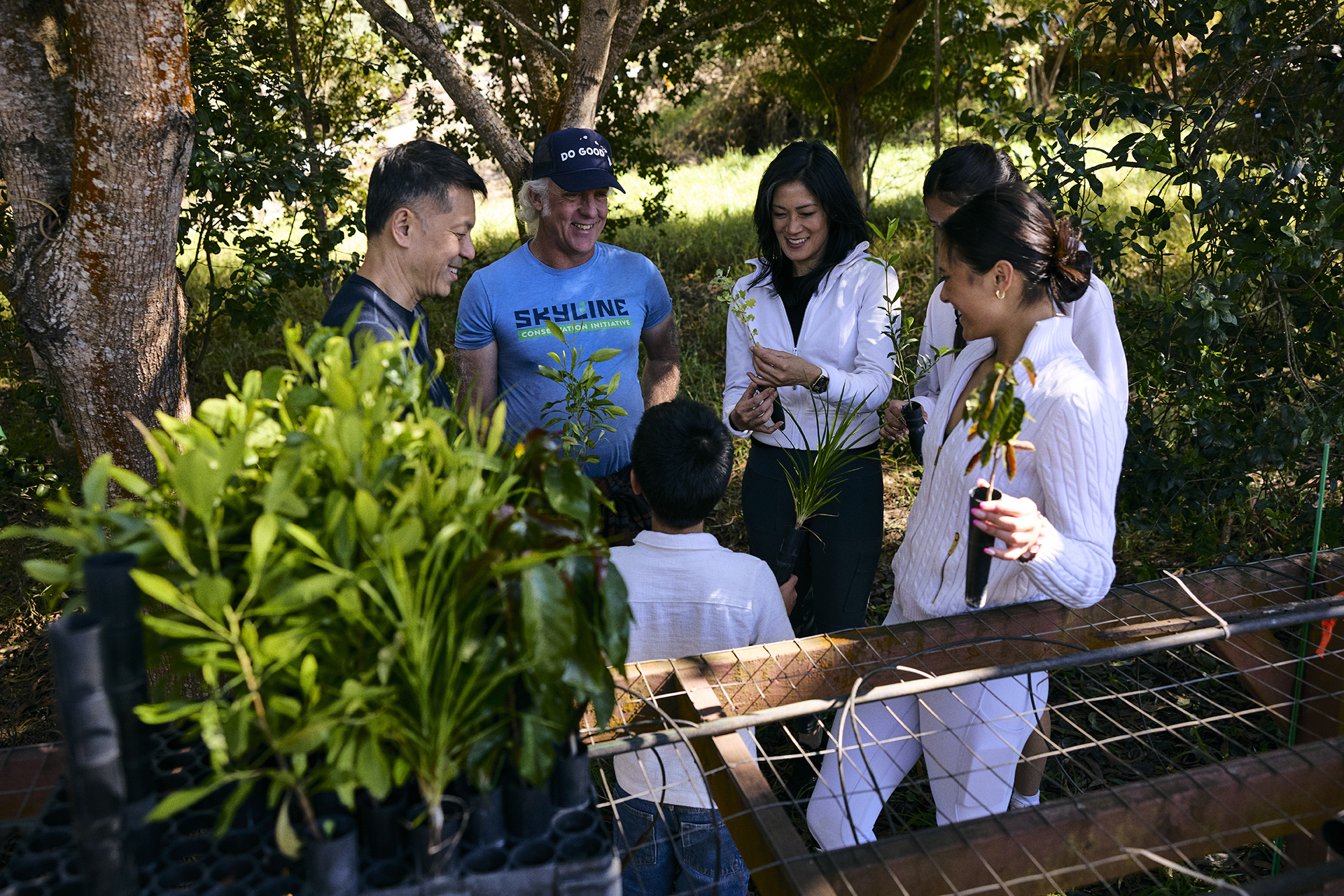
Upcountry Maui, on a sunny afternoon in January, we sat down to chat with Joe Imhoff, who leads the Skyline Haleakalā zipline and conservation efforts that shape our Haleakalā Immersion.
For Joe, protecting the future means reviving the ecological wisdom rooted in Hawaiʻi’s past. With more than 20 years devoted to the field, Joe has dedicated his life to native habitat restoration, invasive species management, and strengthening wildlife resilience on Maui. A conservation practitioner and community organizer, he knows his landscape intimately, counting trees among his closest companions, and can identify each seedling within his stewardship area. As the manager of the Haleakalā zipline course and conservation initiative at Skyline Hawaiʻi, Joe stands among those at the forefront of ecological conservation on Maui, fostering collective stewardship through boots-on-the-ground restoration work and a deeply held commitment to protecting the island’s future.
Conservation has been at the heart of Skyline’s mission since its inception in 2002, with founder Danny Boren envisioning the company as an ecotourism venture. Joe carries that legacy, recognizing the integration of habitat restoration into the business model as essential: “It’s so important for companies that make money off of experiences on the land to give back and make that land better.”
Native habitat restoration is needed now more than ever, Joe emphasizes, as Maui lies at the epicenter of extinction in America, having lost 80% of its native species.
“What we have left we need to protect at all costs.”
A major driver of the extinction and ecological destabilization seen on Maui today was the introduction of Australian eucalyptus and black wattle trees around the 1870s and 1880s. Intentionally planted as fast-growing timber sources, these species, Joe explains, have caused a cascade of ecological problems for the landscape. When transplanted from their desert origins to the tropics, where water is abundant, these trees saw exponential growth. In doing so, they drained the water tables –“like straws that just suck all the water out of the ground”–the reverse of a native forest’s role. The result is a chain reaction: water tables dry up, aquifers empty, biodiversity declines, and ecosystems suffer. Native trees, by contrast, function as natural sponges, collecting moisture from the clouds and replenishing water reserves.
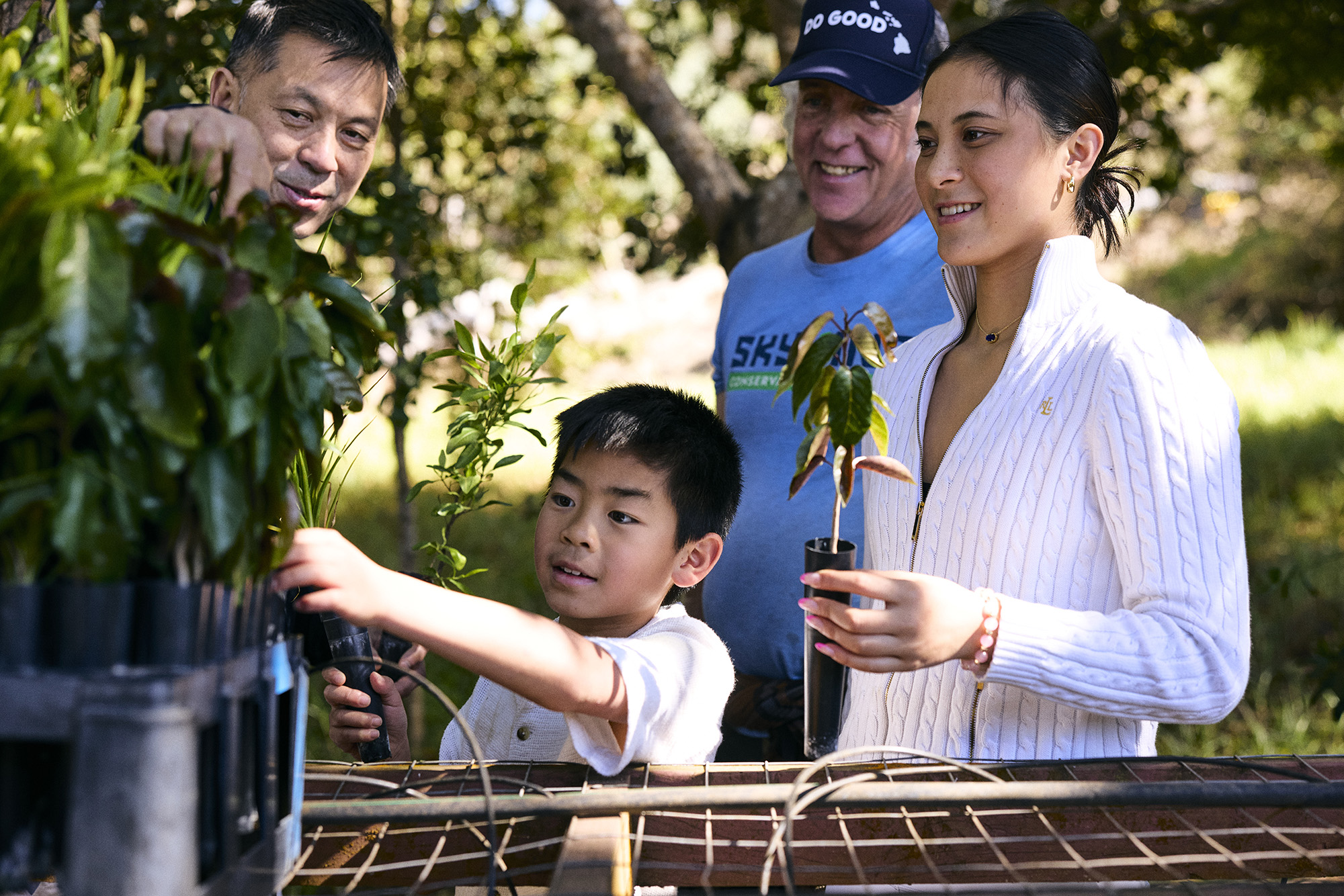
For Joe, the solution to our future lies in Hawaiʻi’s past, in looking back to the practices, principles, and ecology of Native Hawaiian land stewardship–striving “to bring back the forest ecosystem that should be here, that was here thousands of years ago.” Native Hawaiian knowledge systems prioritize balance, resilience, and the intimate connection between people and land. These ancestral practices are not just about survival—they are about stewardship, our familial relationship to the land, and ensuring the responsible use of resources for generations to come.
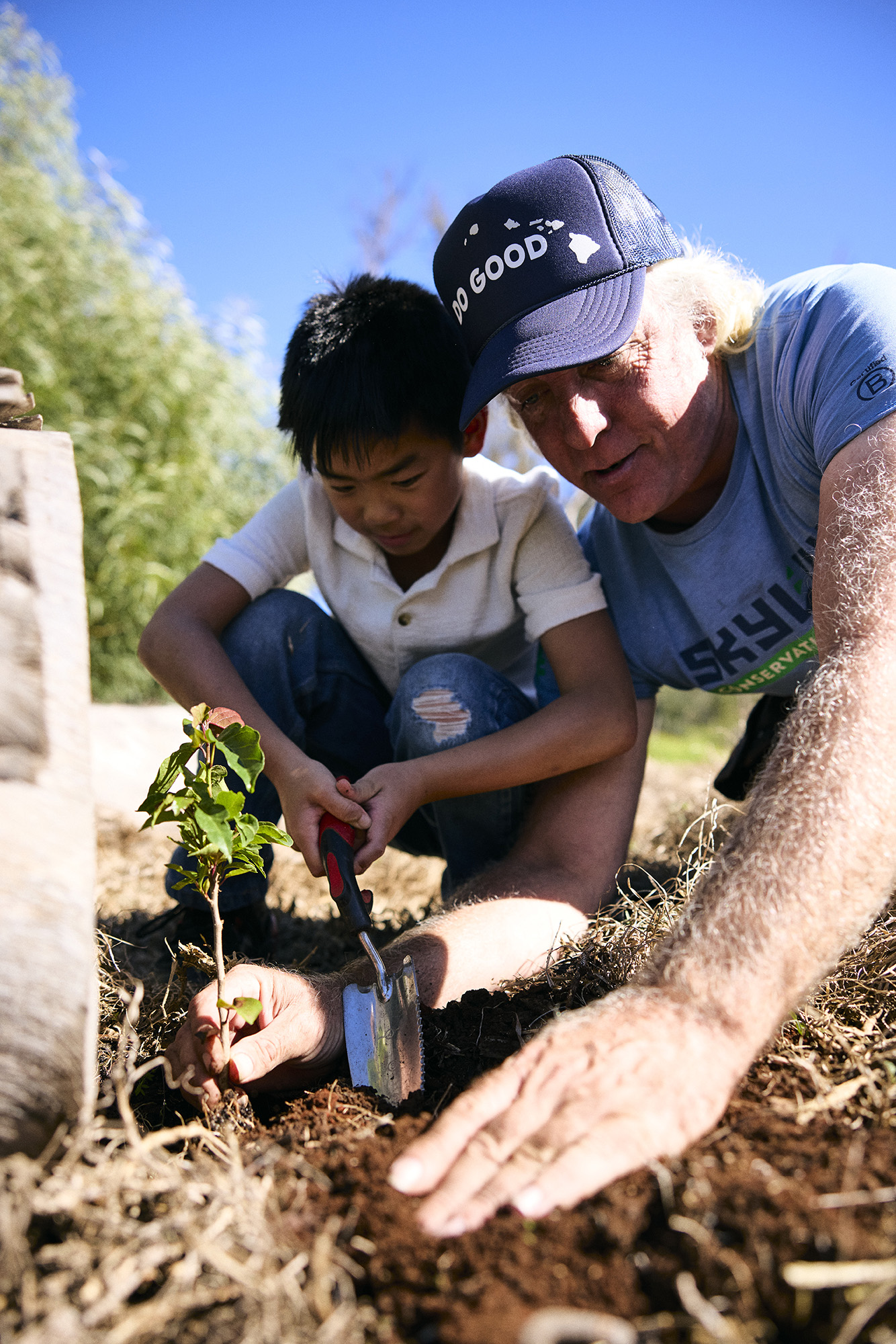
Joe is not alone in this work; all of Skyline’s zipline employees are also trained as conservationists. With the help of more than 20,000 community volunteers, Skyline’s Haleakalā conservation initiative has replanted over 22,000 native plants. By sourcing and propagating all seedlings from Haleakalā itself, the initiative ensures the restored forest retains its ecological integrity.
The success of the conservation initiative has been almost immediate, visible in the return of Hawaiian honeycreepers (a highly diverse subfamily of finches, endemic to Hawaiʻi, of which many are sadly now extinct or endangered) to the area, the replenishment of the watershed, which has led to the emergence of a freshwater spring, and the strengthening of natural wildfire defenses. The latter is especially critical for Maui, where recent years have seen some of the most devastating fires the community has ever experienced. Joe explains the direct linkage between the forest’s role in fire outbreaks: “We have some of the worst wildfires that just devastated our community because we have this desert forest and no water in the soil.” In this way, the benefits of forest restoration extend beyond the forest itself, beyond the koa, sandalwood, and maile vines to restore the delicate balance that sustains both people and wildlife on the island.
The challenges are certainly immense. Invasive species, climate change, and decades of native habitat loss have pushed Maui’s ecosystems to the brink. Yet Joe remains grounded in the lessons of the past, seeing a clear path forward toward a future where nature and community flourish symbiotically.
He acknowledges that true resilience doesn’t come from quick fixes, but from collective effort, persistence, and honoring the Hawaiian knowledge systems that have sustained the islands for millennia.
“The forest disappeared over time, but it’s not gone…It’s been lost, but it’s not forgotten.” A direct line is drawn to Dr. Seuss’s The Lorax, wherein the fate of the forest lies in the hands of a young boy and a single seed. Joe aptly refers to his project as “The Lorax Part 2.” But instead of a single seed, the conservation initiative has created a living seed bank, propagating, planting, and sharing thousands of seeds with neighbors each year.
“The key to the future is deep in the past.” It’s a philosophy that demands patience, respect, and humility, but it is also one that offers hope. It is our kuleana, a responsibility and a privilege, as well as a promise that what has endured for generations can thrive for generations to come. And in the quiet growth of a native tree, in the return of a honeycreeper to its rightful forest home, and in the refilling of water to a depleted aquifer, that promise becomes visible.
At LOAM, we’re proud to partner with Skyline Hawaiʻi, supporting their mission and the people—like Joe Imhoff—who bring it to life on the ground. Our Immersion directly supports this mission and invites guests to learn, participate, and experience conservation efforts firsthand, leaving Haleakalā stronger.



.svg)